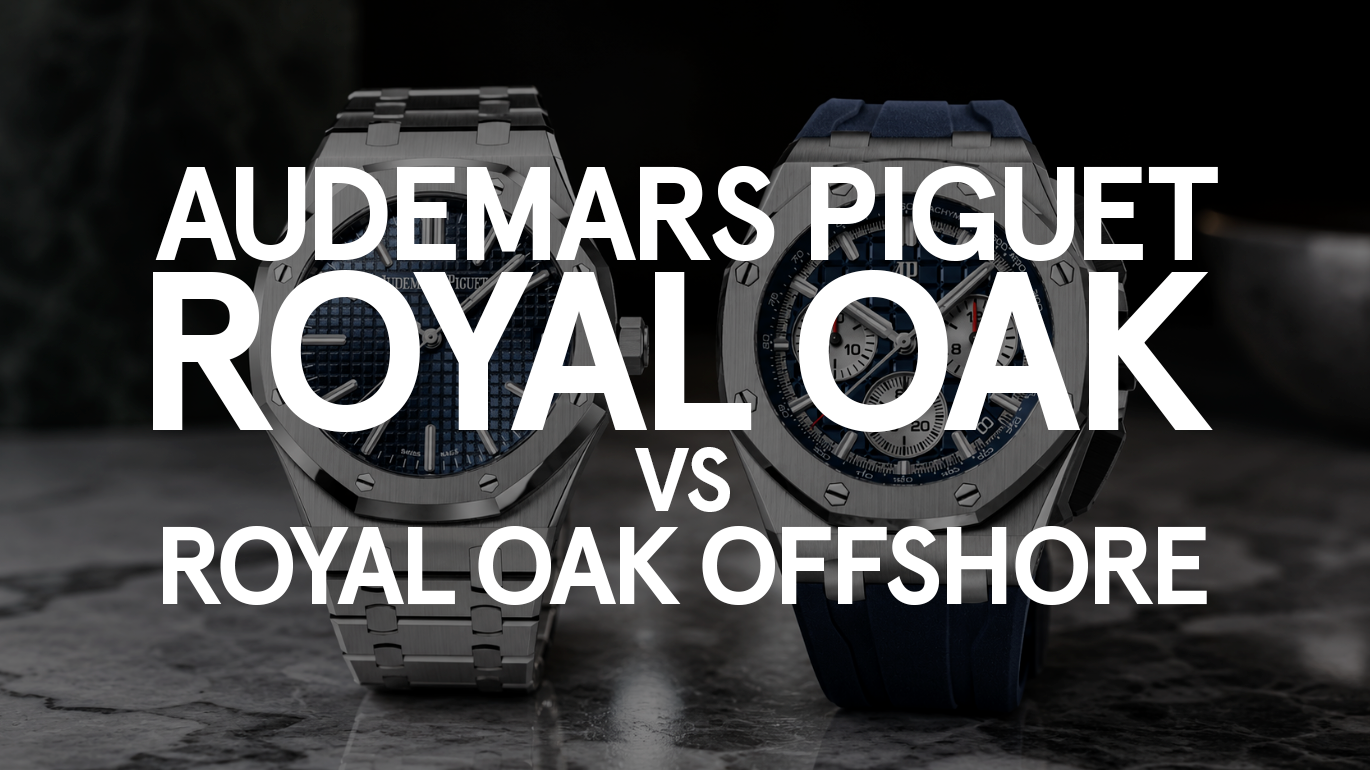
The Royal Oak and the Royal Oak Offshore share the same octagonal bezel and the same AP branding, but they are not variations of one idea. One feels restrained. The other almost feels confrontational. Here’s what actually separates these two Audemars Piguet lines in 2026, and which one tends to make more sense depending on the person wearing it.
Search interest around the Audemars Piguet Royal Oak vs Royal Oak Offshore keeps climbing for a reason. People see the same case shape, the same logo, and assume the watches are basically interchangeable. Spend a few minutes handling both side by side and the differences become obvious pretty quickly.
That contrast tends to surprise first-time buyers, especially people shopping online who’ve only seen wrist shots and hype videos. In practice, the Royal Oak and the Offshore attract very different personalities. Different wardrobes too, honestly.
We’ve had everything come through lately. Panda chronographs, blue dial Royal Oaks, titanium Offshore pieces, full ceramic models, stainless steel classics. After seeing how buyers react to each one in person, certain patterns start repeating themselves. So instead of repeating the usual brochure language, let’s break it down properly.
I · The Origin Story
The Royal Oak Started As A Risk, And People Forget That
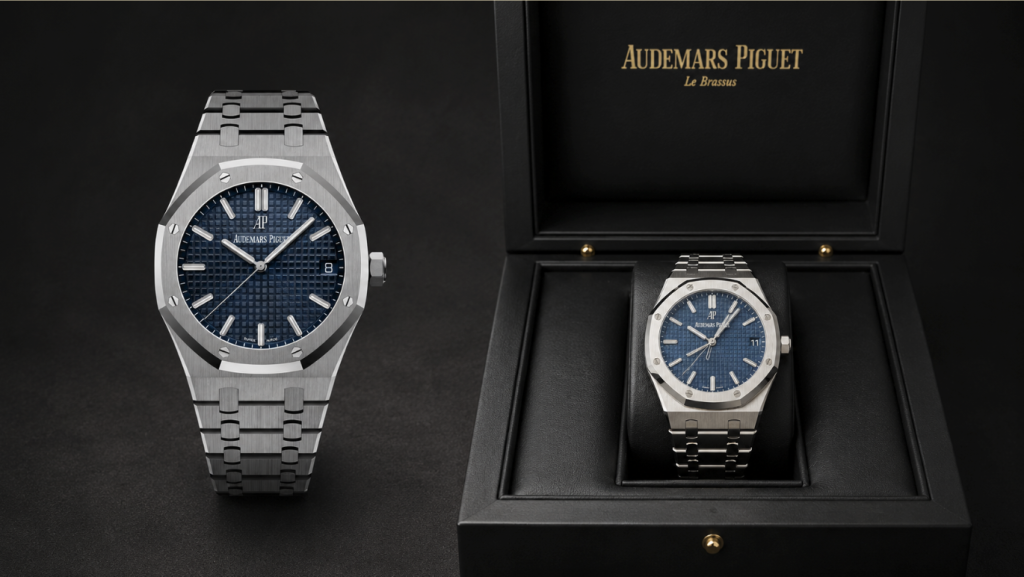
A lot of buyers know the Royal Oak is “important,” but not everybody understands why. Back in 1972, luxury watchmaking looked very different. Thin gold dress watches dominated the high-end market. Then Audemars Piguet released a steel sports watch designed by Gérald Genta and priced it higher than many precious metal watches. At the time, that sounded ridiculous. It also worked.
The Royal Oak changed the direction of luxury sports watches almost overnight. Integrated bracelet, exposed bezel screws, sharp angular finishing. Those details feel normal now because half the industry copied the formula afterward. You can learn more about the history of Gérald Genta’s watch designs and how his work shaped modern luxury sports watches.
The Offshore came later. Much later, in the early 1990s. And honestly, traditional AP collectors hated it in the beginning. The Offshore was bigger, thicker, louder, and intentionally less refined. AP wanted younger buyers who thought the original Royal Oak looked too conservative. In hindsight, the strategy was smart. The Offshore eventually developed its own following entirely separate from the classic Royal Oak crowd.
That’s part of why this comparison still matters in 2026. These watches share DNA, but emotionally they land in completely different places.
In stock now
Authenticated Audemars Piguet. Royal Oak and Offshore references, ready to ship.
II · The Key Differences
Royal Oak vs Royal Oak Offshore: The Differences That Actually Matter
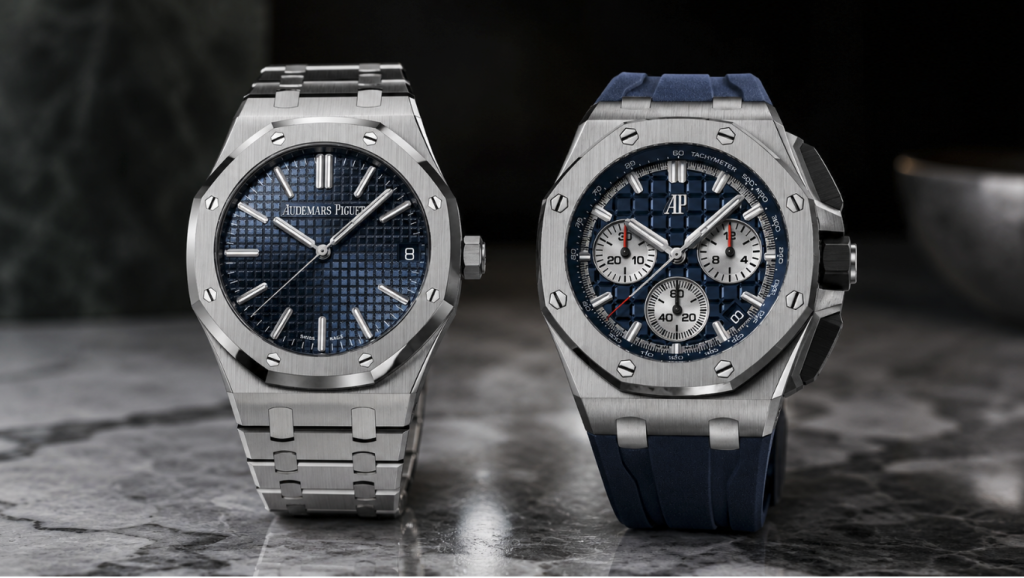
Most comparison articles obsess over measurements. Thickness, diameter, movement references. Those matter, sure. But once people actually try both watches on, the conversation usually changes.
The Royal Oak wears slimmer than most buyers expect. Even larger references still feel controlled and balanced. The finishing is where things get slightly obsessive. AP transitions between brushed and polished surfaces better than almost anyone, and under good lighting the case geometry looks almost architectural. Then you put on an Offshore, and it’s a totally different experience. It sits taller, feels heavier, more physical. Pushers are chunkier. Cases have more visual aggression. Some Offshore models almost feel closer to performance equipment than jewelry. That’s intentional.
Size At A Glance
Royal Oak
Typically 37mm to 41mm. Slim, balanced, finishing-led. Emphasizes elegance.
Royal Oak Offshore
Commonly 42mm to 44mm. Taller, heavier, sport-led. Thickness matters more than diameter.
Royal Oaks generally sit between 37mm and 41mm. Offshore models commonly push into 42mm, 43mm, or 44mm territory, though the thickness matters even more than the diameter. A 43mm Offshore doesn’t wear like a normal 43mm watch, and most people don’t realize that until it’s on their wrist. There’s also a difference in movement philosophy. Royal Oaks tend to emphasize elegance and finishing, while Offshore chronographs lean more into sport functionality and durability.
Pricing changes the conversation too. In 2026, stainless steel Royal Oak references still command serious premiums on the secondary market. Offshore prices fluctuate more depending on material, configuration, and overall demand cycles. Titanium and ceramic Offshores especially have picked up momentum recently. One interesting thing about ceramic APs: they almost never photograph as well as they look in person. The texture and finishing get flattened online. Current luxury watch market pricing trends show continued strength in premium stainless steel sports models, especially across AP, Rolex, and Patek Philippe references.
Compare in person
See current Royal Oak and Offshore pricing side by side.
III · The Royal Oak’s Appeal
Why The Royal Oak Still Pulls In So Many Buyers
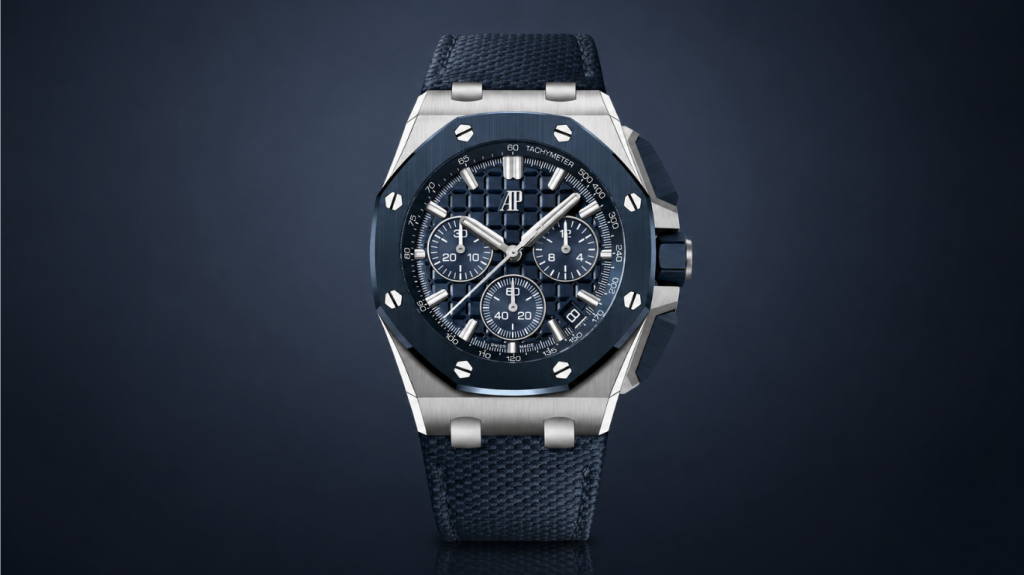
There’s a reason people keep circling back to the Royal Oak even after looking at dozens of alternatives. It just works in more situations. Suit, t-shirt, dinner, airport. Doesn’t really matter. The watch adapts without trying too hard, and that flexibility becomes more valuable over time than most buyers expect.
The bracelet deserves more credit than it gets. People talk about AP finishing constantly, but comfort is the part that usually surprises first-time owners. Once sized properly, the bracelet almost disappears on the wrist. The articulation feels incredibly smooth, more refined than a lot of competing integrated bracelet watches.
Recognition plays a role too, even outside watch circles now. Athletes wear Royal Oaks. Musicians wear them. Tech founders. Celebrities who probably couldn’t explain the movement inside the watch if you asked them. Social media amplified the visibility, but the Royal Oak already had decades of credibility before Instagram got involved.
Some watches feel exciting for a year
and exhausting after five.
The Royal Oak usually avoids that trap.
A standard Royal Oak tends to age well with the owner. That sounds vague, but collectors know exactly what it means. Recent data around collector opinions on modern AP models shows continued demand for Royal Oak chronographs, titanium Offshores, and more experimental AP releases.
The Panda chronograph references still move quickly in 2026 because they hit a very specific balance. Sporty, but not chaotic. Attention-grabbing without screaming for attention. The blue and black “Batman” style configurations have also become increasingly popular with younger buyers who want something modern without fully stepping into Offshore territory. And for buyers wanting one serious watch instead of a rotation, the Royal Oak still makes a convincing case.
One watch to do it all
Shop authenticated Royal Oak references, including Panda and blue dial chronographs.
IV · The Offshore’s Appeal
Why Some Collectors End Up Preferring The Offshore Instead
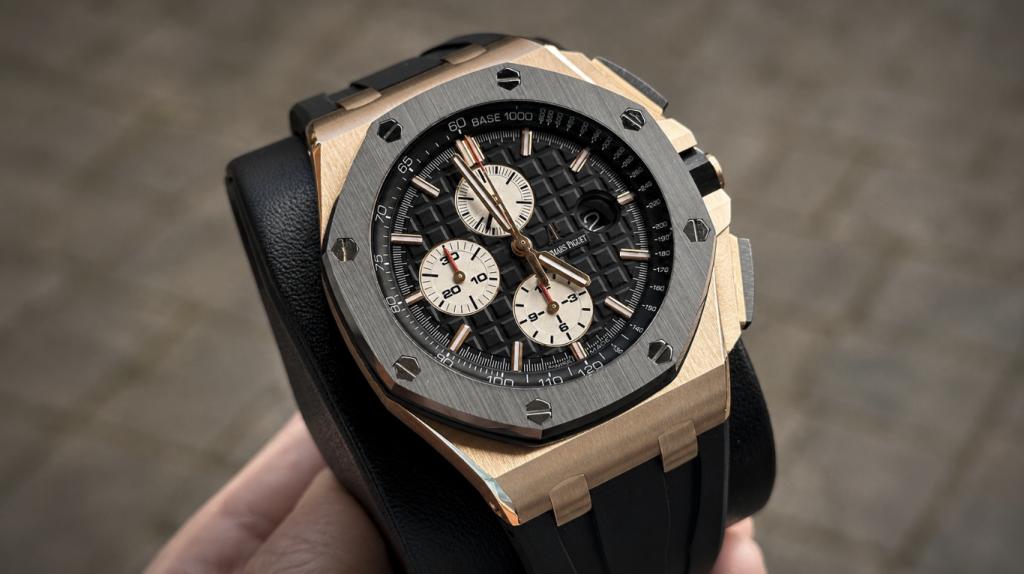
This is where opinions split hard. Some people try the Offshore once and immediately understand it. Others never do. The Offshore isn’t subtle, and that’s the point. Buyers who gravitate toward larger watches usually connect with it faster because the Offshore has real wrist presence. Not fake oversized presence either. The proportions are deliberate. Aggressive, yes, but still cohesive.
In real-world settings, some owners also feel more relaxed wearing an Offshore daily compared to a polished Royal Oak. Psychologically it feels tougher. More casual. Less delicate. Whether that’s objectively true is debatable, but it still matters.
Titanium Offshore models deserve attention right now because they solve one of the biggest complaints about older references: weight. Large steel Offshores can feel substantial after a full day, and titanium changes the experience completely. Ceramic models are another category entirely. Black ceramic paired with rubber straps gives the Offshore a much more technical personality. Almost stealthy.
And not everybody wants the watch everyone else recognizes immediately. That’s part of the Offshore appeal now. The standard Royal Oak became extremely mainstream over the last several years, while the Offshore still feels slightly more niche and less predictable. Younger buyers especially seem drawn toward it lately, probably because modern dress codes changed. Fewer people wear suits every day now, and the Offshore fits casual wardrobes naturally. That shift matters more than people think.
Bigger, bolder, more casual
Browse Royal Oak Offshore pieces, including titanium and ceramic references.
V · Which One Fits You
Which Fits Better: Royal Oak Or Royal Oak Offshore?
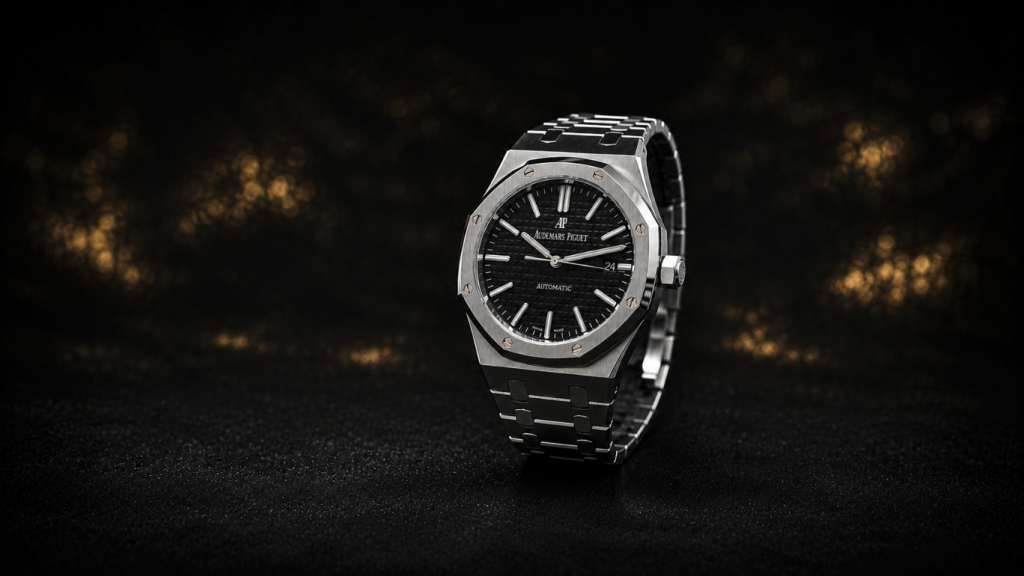
This is the part buyers should probably spend the most time thinking about. Not resale value. Not celebrity ownership. Actual daily life. If you wear tailored clothing regularly, prefer slimmer watches, or want something versatile enough to handle almost every setting, the Royal Oak usually fits better. If your style leans casual and sporty, the Offshore often feels more natural immediately.
Wrist size matters too, although people hate hearing that. Smaller wrists can struggle with Offshore proportions. Even experienced collectors underestimate how much visual space a thick 43mm case occupies. On the flip side, larger wrists sometimes make standard Royal Oaks look surprisingly restrained.
Comfort becomes a factor after long-term wear as well. A Royal Oak often disappears after a few hours. Offshore models usually stay noticeable all day. Some people love that constant presence; others get tired of it faster than expected. Travel habits also shape buying decisions in subtle ways. A Royal Oak attracts recognition instantly in certain places, while Offshore models tend to fly slightly more under the radar outside enthusiast circles.
Then there’s the resale side of things. Historically, Royal Oaks maintain stronger and more stable market demand, especially in stainless steel. Offshore pricing can swing more aggressively depending on trends and specific references. That said, buying luxury watches based entirely on projected resale value usually leads people into watches they never truly wanted in the first place. A lot of expensive mistakes start there. Buyers chase hype, rush into the wrong reference, or ignore condition entirely. This breakdown of common luxury watch buying mistakes explains where expectations usually fall apart for first-time AP buyers.
Still deciding?
Talk to a specialist who’ll help you pick the right reference for your wrist and your life.
VI · Most Requested
The AP Models Buyers Keep Asking About In 2026
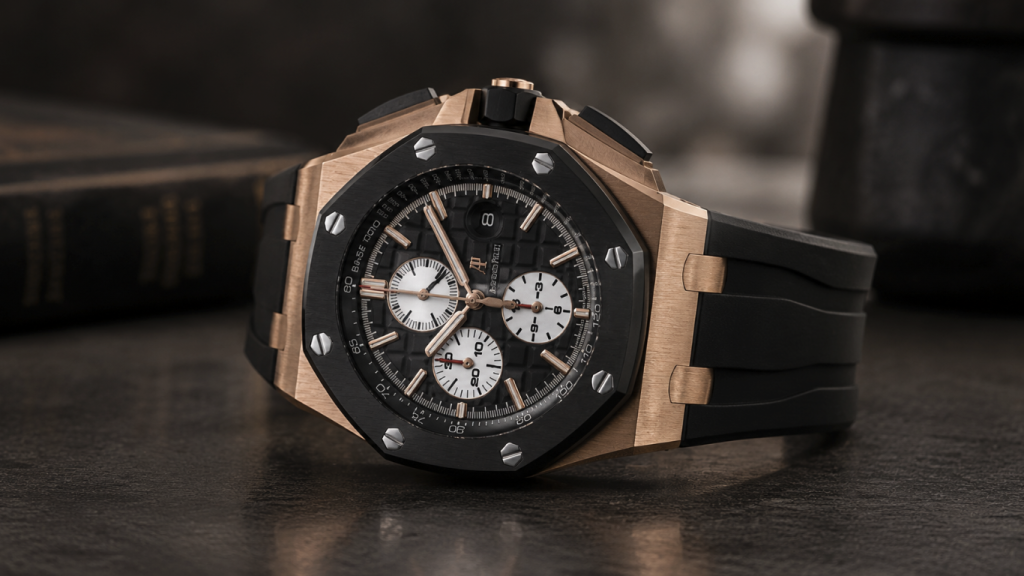
Availability remains frustrating, probably more than most people expected by now. Walk into an AP boutique looking for a desirable Royal Oak reference and you’ll still hear some variation of “we can add you to the list.” Maybe things improve later. Maybe not. That’s why the pre-owned market continues moving so aggressively.
The most requested pieces lately have been pretty consistent: Panda Royal Oak chronographs, blue dial stainless steel references, titanium Offshore chronographs, and ceramic Offshore models, especially black ceramic. The Panda chronographs continue attracting buyers because they balance everyday wearability with collector appeal unusually well. They feel sporty without becoming overly loud. The blue and black “Batman” configurations have also gained traction because they look modern without feeling trendy in a disposable way.
For Offshore buyers, titanium still stands out as one of the strongest combinations overall. You get the oversized Offshore personality without carrying unnecessary weight all day. Ceramic models feel completely different. More technical. Sharper somehow. Photos rarely capture the depth of the finishing correctly.
Dealer Note
Over-polished AP cases lose their sharpness fast. Crisp bevels and proper factory geometry make a huge difference, especially on Royal Oaks where finishing is such a major part of the appeal. A clean example with honest wear almost always feels better long-term than a heavily refinished watch with a lower asking price.
The references everyone wants
Panda chronographs, blue dials, titanium and ceramic Offshores.
VII · Buying Pre-Owned
Why Buying Pre-Owned AP In 2026 Often Makes More Sense
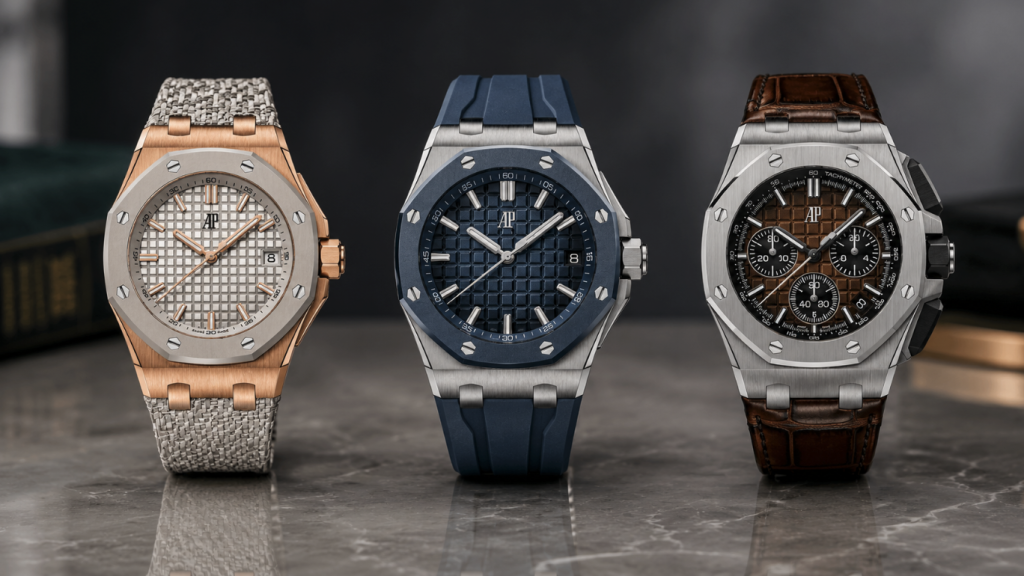
The pre-owned luxury watch market matured a lot over the last few years. Buyers became more informed and more selective. People now understand that buying pre-owned isn’t automatically a compromise. In some cases it’s the better route entirely. With the Royal Oak vs Royal Oak Offshore decision, the secondary market gives buyers access to references boutiques simply don’t have available. Older dial configurations, discontinued models, titanium and ceramic variants that rarely appear through retail channels.
There’s also less uncertainty. Waiting lists frustrate people because they’re vague by design. Pre-owned inventory is tangible. You see the exact watch, the exact condition, the exact configuration.
That clarity matters
when you’re spending this kind of money.
Some older AP references also carry more personality than current releases. That’s subjective, but collectors mention it constantly. Certain older Offshore and Royal Oak models feel less polished in a corporate sense. More raw. Slightly less commercial. Not everybody prefers that. Plenty of buyers love modern AP finishing and updated movements. Still, the charm of older references keeps pulling collectors back in.
One thing worth emphasizing: buy from reputable specialists. Counterfeits and heavily modified watches have become much harder to spot over the last few years, especially online. If you’re buying pre-owned AP, this guide on how to authenticate luxury watches is worth reading before wiring money anywhere. High-end AP replicas have improved visually over the years, but movement finishing, case geometry, and bracelet execution still separate authentic pieces pretty quickly once you know what to look for. Most problems happen when buyers chase unrealistic deals from questionable sellers, and usually that story ends badly.
Buy with confidence
Every AP we sell is fully authenticated. No waiting lists, no guesswork.
Common Questions
Royal Oak vs Royal Oak Offshore FAQ
What is the main difference between the Royal Oak and the Royal Oak Offshore?
The Royal Oak is slimmer, more refined, and more versatile, usually sized between 37mm and 41mm. The Royal Oak Offshore is larger, thicker, and more aggressive, commonly 42mm to 44mm, with a sportier, more casual character. They share the octagonal bezel and integrated bracelet, but they wear and feel very differently.
Which holds its value better in 2026?
Historically, stainless steel Royal Oak references hold stronger and more stable secondary-market demand. Offshore pricing tends to swing more depending on material, configuration, and current trends, though titanium and ceramic Offshores have gained momentum recently.
Is the Royal Oak Offshore too big for smaller wrists?
It can be. The Offshore’s thickness occupies more visual space than the diameter alone suggests, so smaller wrists often find it overwhelming. Trying one on before buying is strongly recommended, since photos consistently distort the proportions.
Should I buy a new or pre-owned Audemars Piguet?
Pre-owned often makes more sense in 2026. Boutique waiting lists are long and vague, while the secondary market gives you access to discontinued references, older dials, and titanium or ceramic variants you rarely see at retail. Just buy from a reputable specialist who authenticates every piece.
Which AP references are most in demand right now?
Panda Royal Oak chronographs, blue dial stainless steel references, titanium Offshore chronographs, and black ceramic Offshore models are the most consistently requested pieces in 2026.
In Closing
Royal Oak Or Offshore? It Comes Down To Personality
The Royal Oak vs Royal Oak Offshore debate really comes down to personality more than technical specs. The Royal Oak remains cleaner, slimmer, and easier to wear across different situations. For a lot of collectors, it’s still the benchmark luxury sports watch. The Offshore takes the opposite route: bigger, more aggressive, more casual. It doesn’t try to blend into the background, which is exactly why certain buyers connect with it immediately. Neither approach is wrong.
If anything, the mistake is buying either watch without trying it on first. Photos distort proportions constantly. A Royal Oak may feel more refined than expected once it’s on your wrist. An Offshore may either completely win you over or feel overwhelming within thirty seconds.
If you’re shopping pre-owned in 2026, focus less on hype cycles and more on condition, authenticity, and long-term enjoyment.
The right AP should still feel exciting months later, when you glance down at your wrist for absolutely no reason.
The Watch Connect
Ready to find your Royal Oak or Offshore?
Authenticated pre-owned Audemars Piguet, fairly priced and ready to ship. Panda chronographs, blue dials, titanium and ceramic references. No waiting lists, no boutique politics.